
the discovery antiquity
The return to antiquity in the 18th century and the rediscovery of ancient sites, Herculaneum and Pompeii
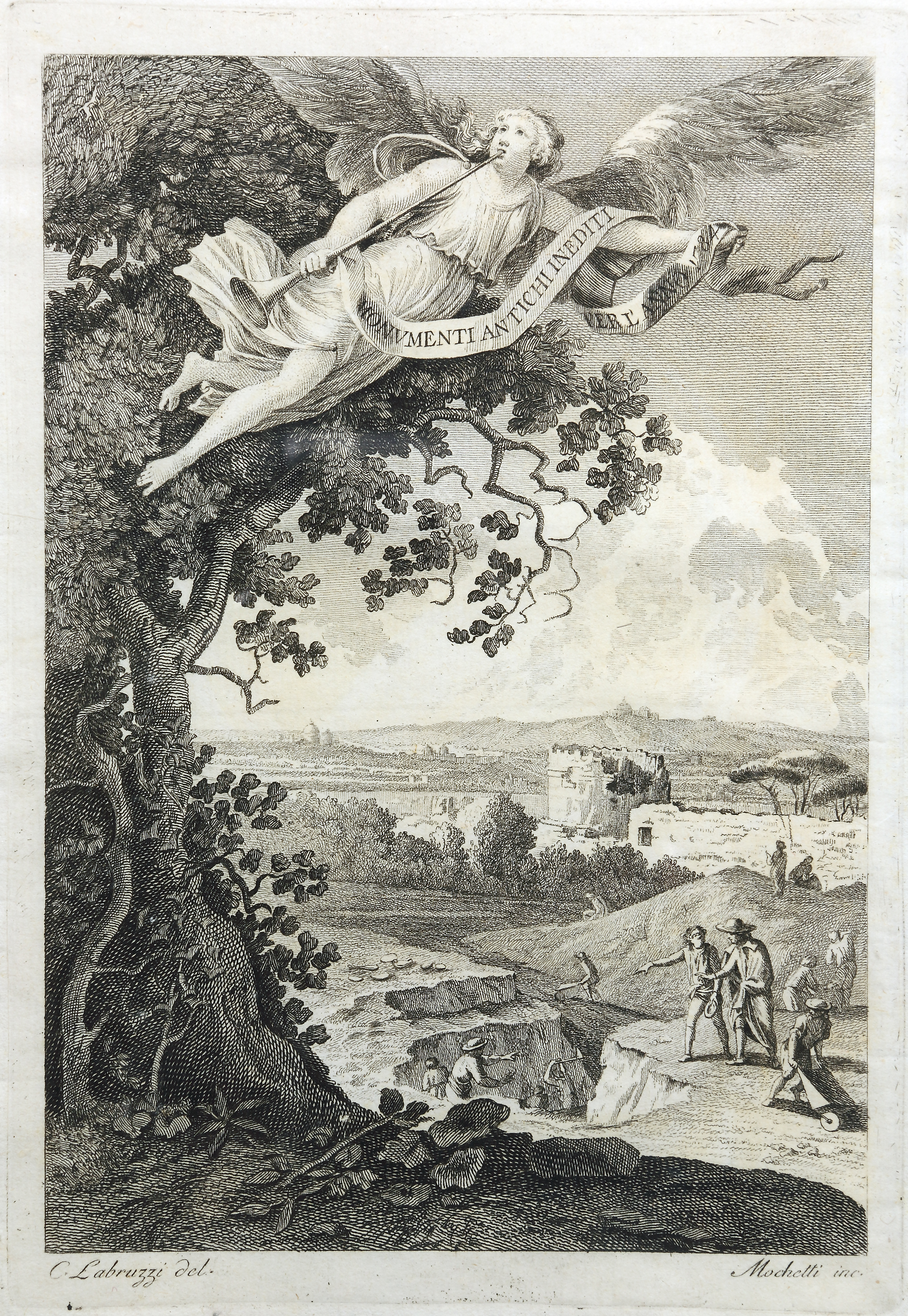
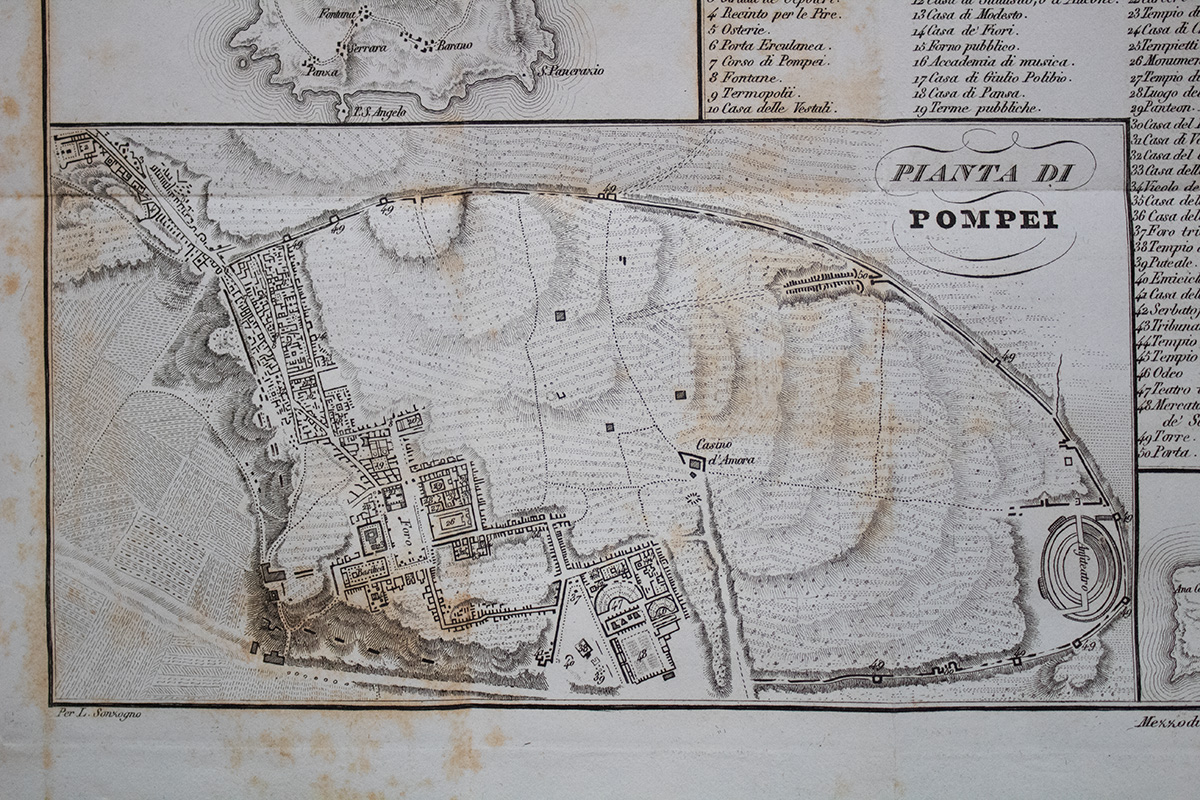
The 18th century is the peak of reference to classical antiquity, whether in politics, literature or the arts: it is thanks to the discovery in 1738 of Herculaneum, and in 1748 of Pompeii. All the remains of this glorious past are exhumed and exhibited, then systematic excavations will be organized.
Common references, a common language
Marked by these discoveries, watered by the great themes of the Europe of Enlightenment, engaged in the political experiments of the Revolution and the Empire, the Western elites of the late eighteenth and early nineteenth centuries constantly refer to the great texts of Greece and especially of ancient Rome.
Greek and Roman antiquities were for them a common language, able to illustrate the political discourse they were putting in place. This common language is found in the « Grand Tour », which leads the Anglo-Saxon and Germanic elites to Rome and Naples for an initiatory journey allowing them to learn in Italy the forms and meanings of ancient art. They gain a way to recognize each other as followers of the most advanced, cosmopolitan, cultured civilization: true followers of progress and enlightenment...
Corsicans, modern image of ancient peoples
As part of the Grand Tour, some English aristocrats add a Corsican stage to their trip, such as the Count of Pembroke, who comes to meet Pascal Paoli and whose portrait he brings back painted by Rotigliardi in his castle of Wilton House.
Corsica was then considered an ancient land, not so much by its monuments, because the remains of Aleria are very poorly known, but by the customs of its inhabitants marked by frugality, disdain for luxury and material goods, honor and total dedication to the country, especially under Pascal Paoli.
Europeans are rediscovering the virtues of republican Rome on the island, while some (including James Boswel) go so far as to compare Corte, the capital of independent Corsica, with Sparta.
The Corsicans, already in the time of Paoli, had a vast classical culture: they were able to cite an impressive number of Latin authors, who were, with the authors of the Enlightenment, the basis of their political culture.


The classical culture of the Bonapartes
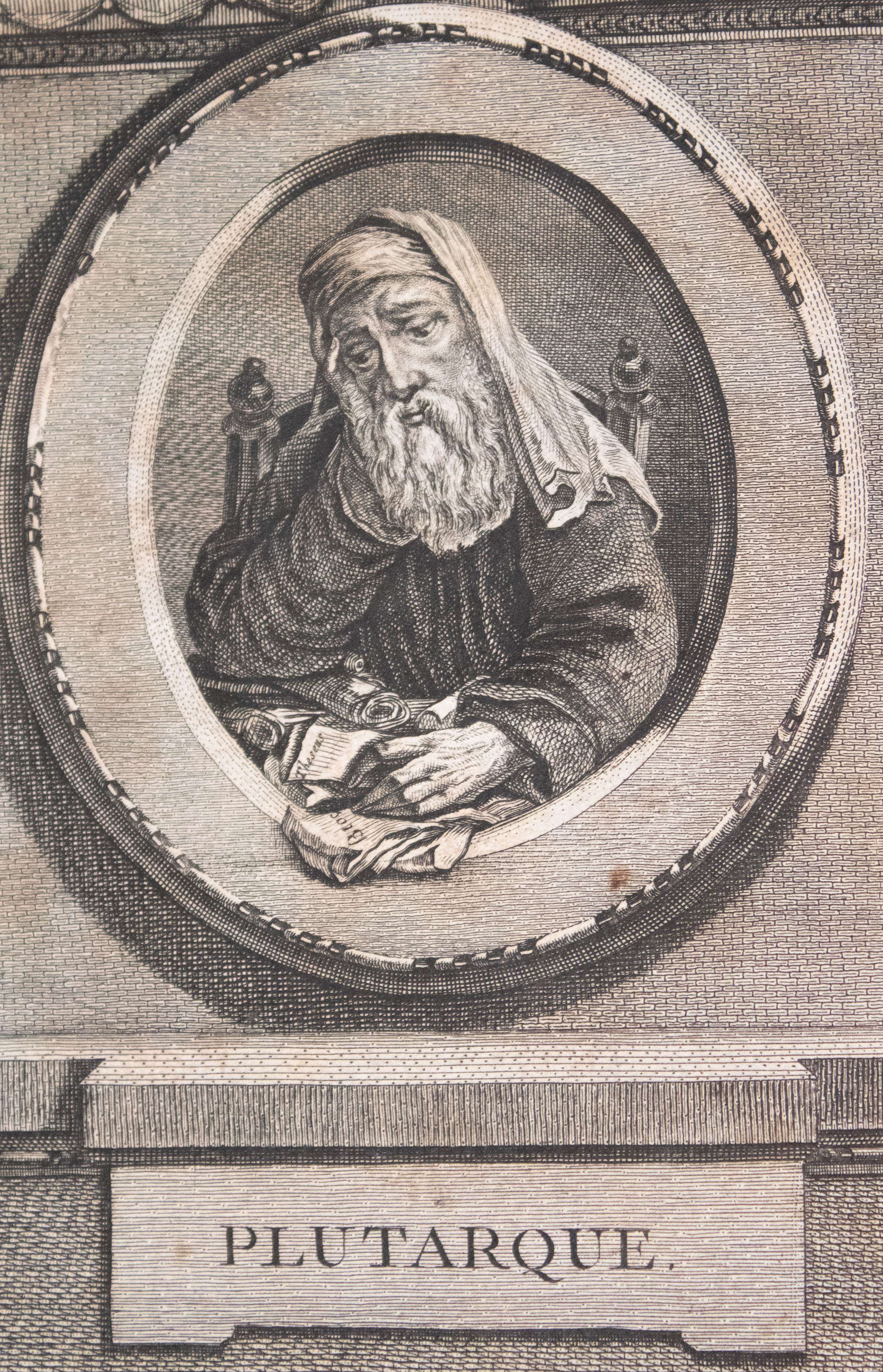
This learned culture, Charles Bonaparte Mastery, like all members of the Corsican elite, but he perfected it in Pisa and Rome, and his frequent references to Metastasis show that he knew about the reuses in contemporary Italian culture. The leaflets of the school of Brienne tell us that Bonaparte, like all his little comrades, was formed by the « example of the heroes of Antiquity », because « history can become for a young man the school of morality and virtue ». The little Napoleon trained in Ajaccio at the school of Abbot Recco, the same one who divided his little pupils between Romans and Carthaginians, should not be too disoriented. Especially since the example of the illustrious men of Plutarch, or the heroes of Caesar and Tite-Live , he brought back whole trunks during his leave at the Bonaparte House. The Ecole Militaire de Paris had to confirm his taste for antique models where he found these Cato, Scipio and other Cincinnatus, to which European travelers, British especially following Boswell, compared Paoli and his contemporaries. The antique model is therefore the watermark that follows the young Napoleon throughout his career, up to
Galery


« She is an ancient woman, she is above revolutions »NAPOLEON
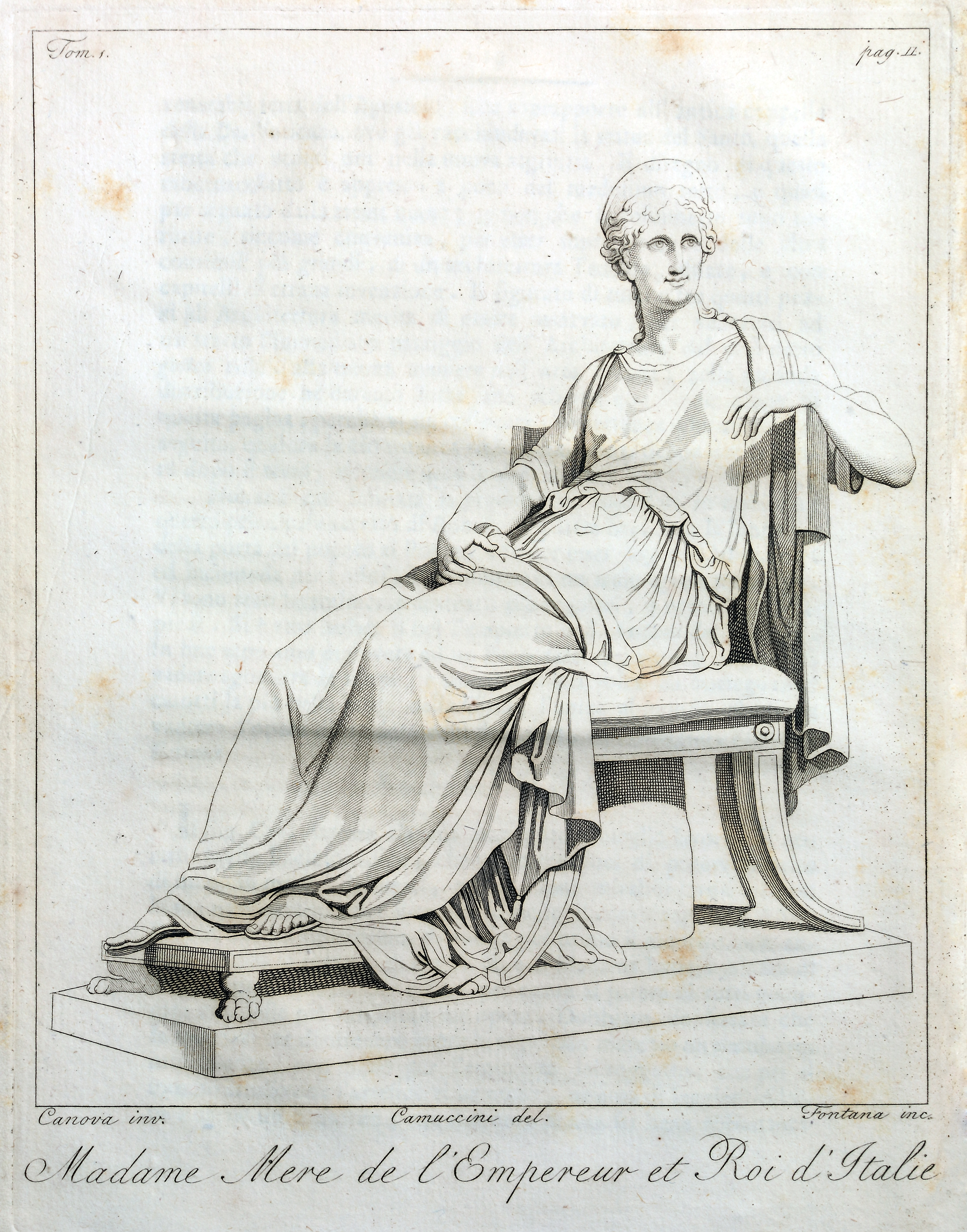
Often, Napoleon compares his mother to Cornelia, mother of the Gracchi: « She is an ancient woman, she is above revolutions ». At the Bonaparte house, a portrait of Letizia, mother of the Emperor, corroborates this statement. It is a bust whose original was made by one of the greatest sculptors of Neoclassicism, Antonio Canova, and which recalls the representations of the Roman empresses.
In Saint Helena, the fallen Emperor reads and comments to his audience The Conspiracy of Catilina, The Gracchi, The Comments of Julius Caesar, the Medea of Seneca. Consulting an edition of Strabo that he had reissued under the auspices of the Institute, he explains that he wanted to reissue all the classics. Still in St. Helena, during a discussion about the destruction and rediscovery of Herculaneum and Pompeii, Napoleon explains that if Rome had remained under his domination, he would have had everything possible restored.
The Role OF OTHER BONAPARTES
The other members of the Bonaparte family also know these references to antiquity. They will also play an important role in the valorization of ancient heritage.

As queen of Naples, Caroline will encourage the excavations of Pompeii . During his reign, up to six hundred workers worked at the same time on the archeological site. She thus continues the action of her brother Joseph, whom she succeeded after the departure of the latter for the throne of Spain. The painter Wicar depicted her holding the plans of what is now the archeological museum of Naples.
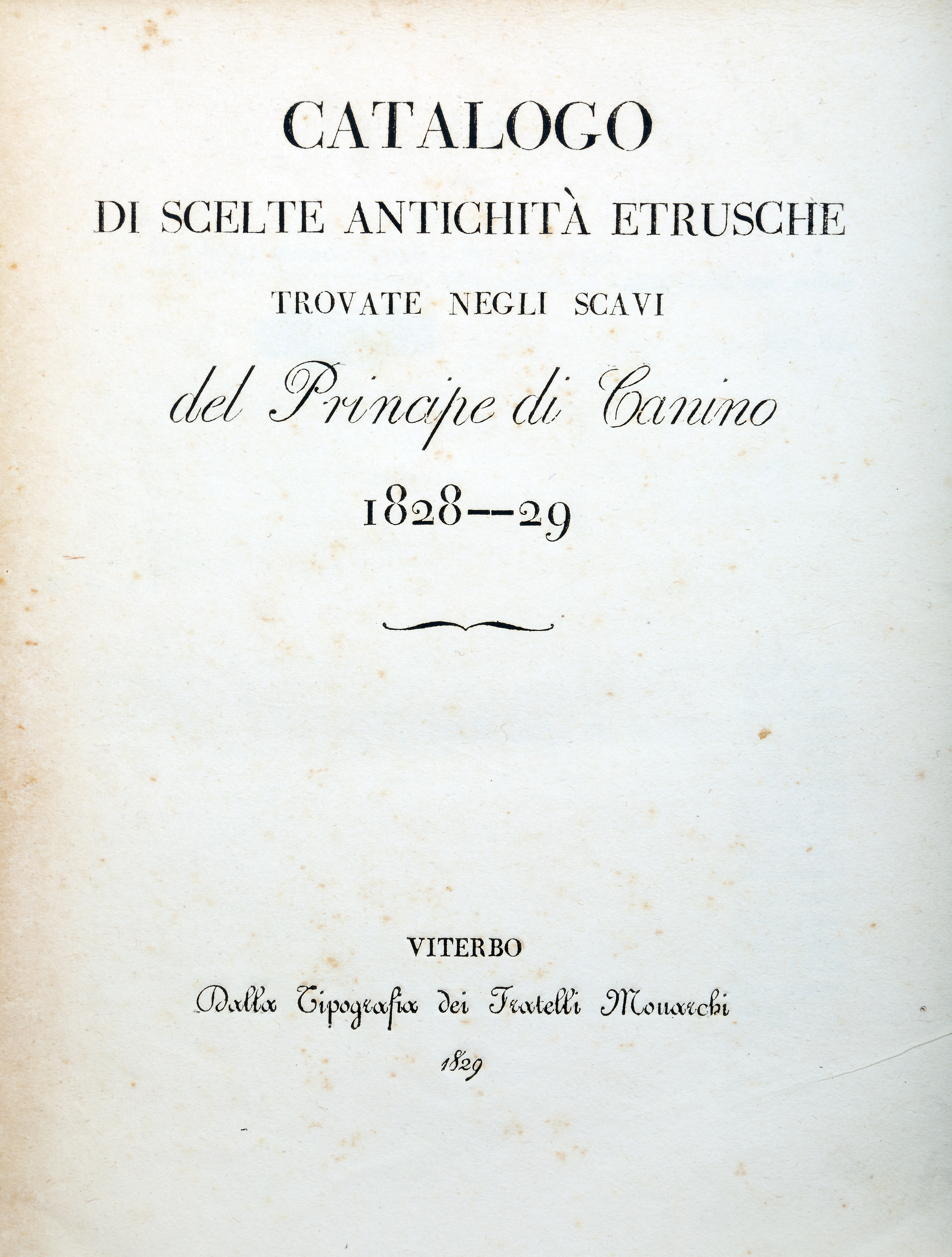

Made a prince by the Pope, Lucien will find on his lands of Canino Etruscan remains and objects, a culture that he will be one of the first to discover and highlight.
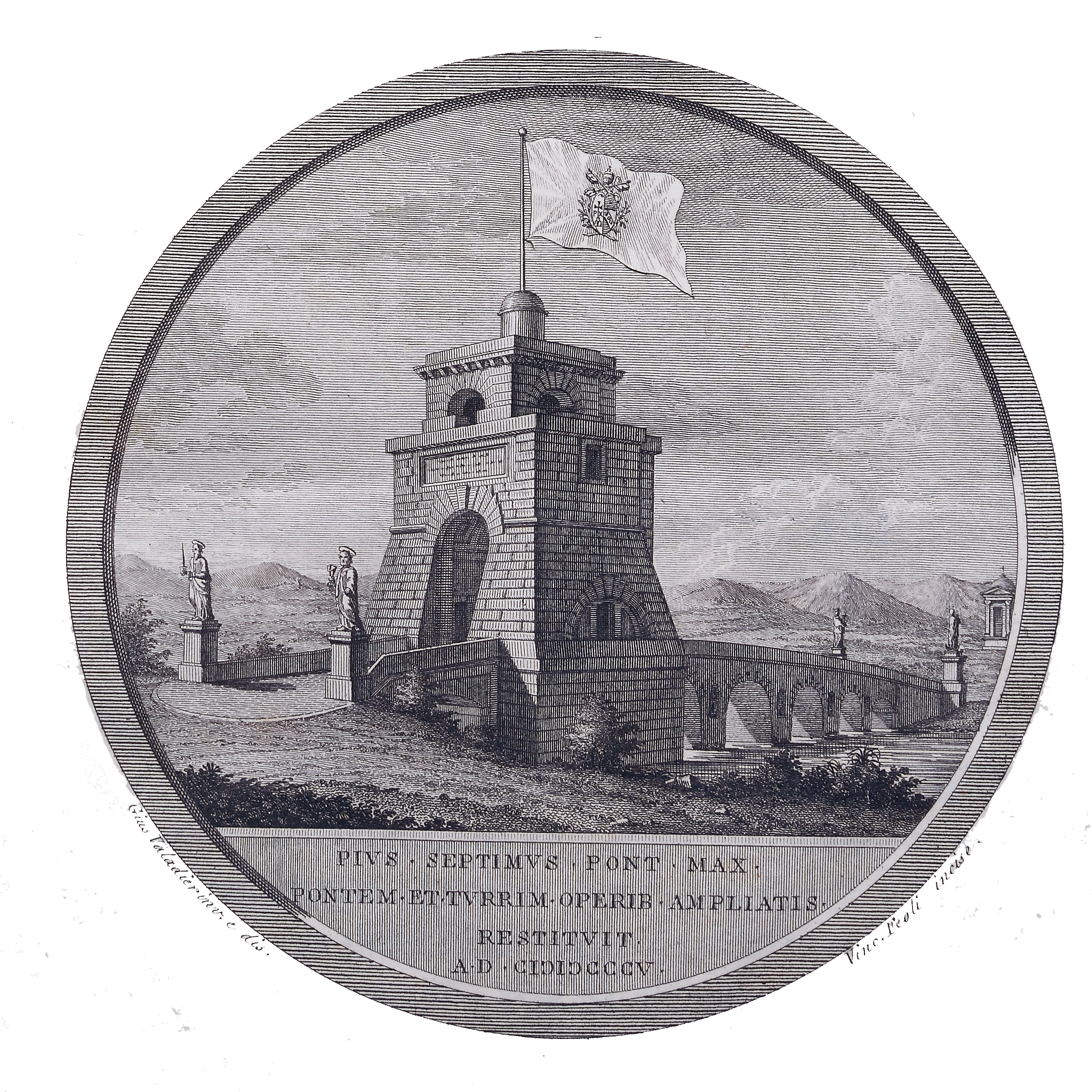
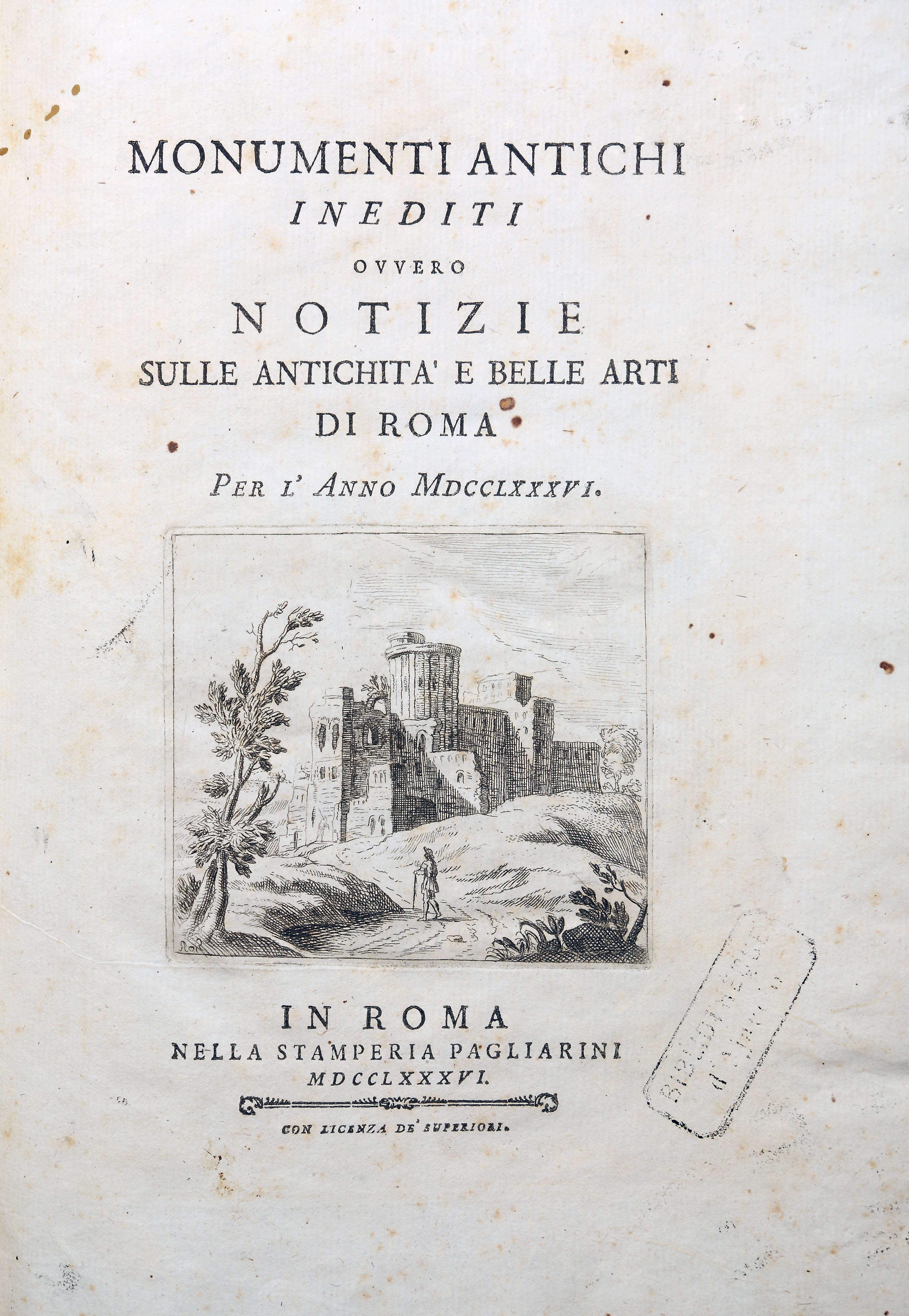
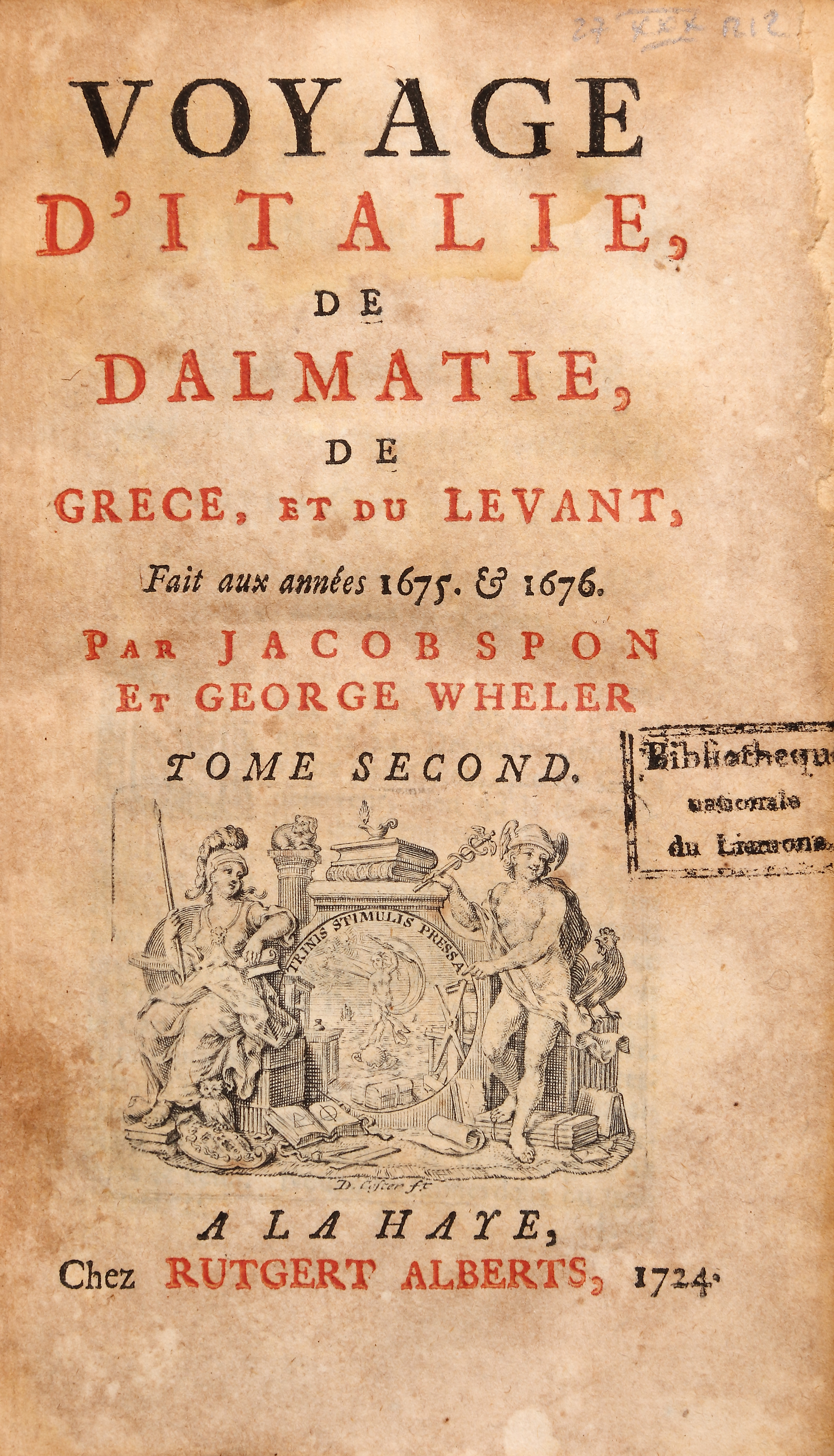
Elisa in exile in northern Italy, will pay on his tape the excavations of Aquileia, which had nearly two hundred thousand inhabitants under the Roman Empire. Finally, by creating the collection of the Fesch library, Lucien Bonaparte and cardinal Fesch wanted the Corsicans, and the Ajaccians in particular, to be able to know the vocabulary of all the intellectuals, artists and politicians of the time. This is why the collections of the heritage library are full of references to antiquity, ranging from works on ancient monuments to archeological excavations, treatises on architecture and books on the history of art, not to mention the major works of ancient and Italian literature.
Video: Herculaneum excavations
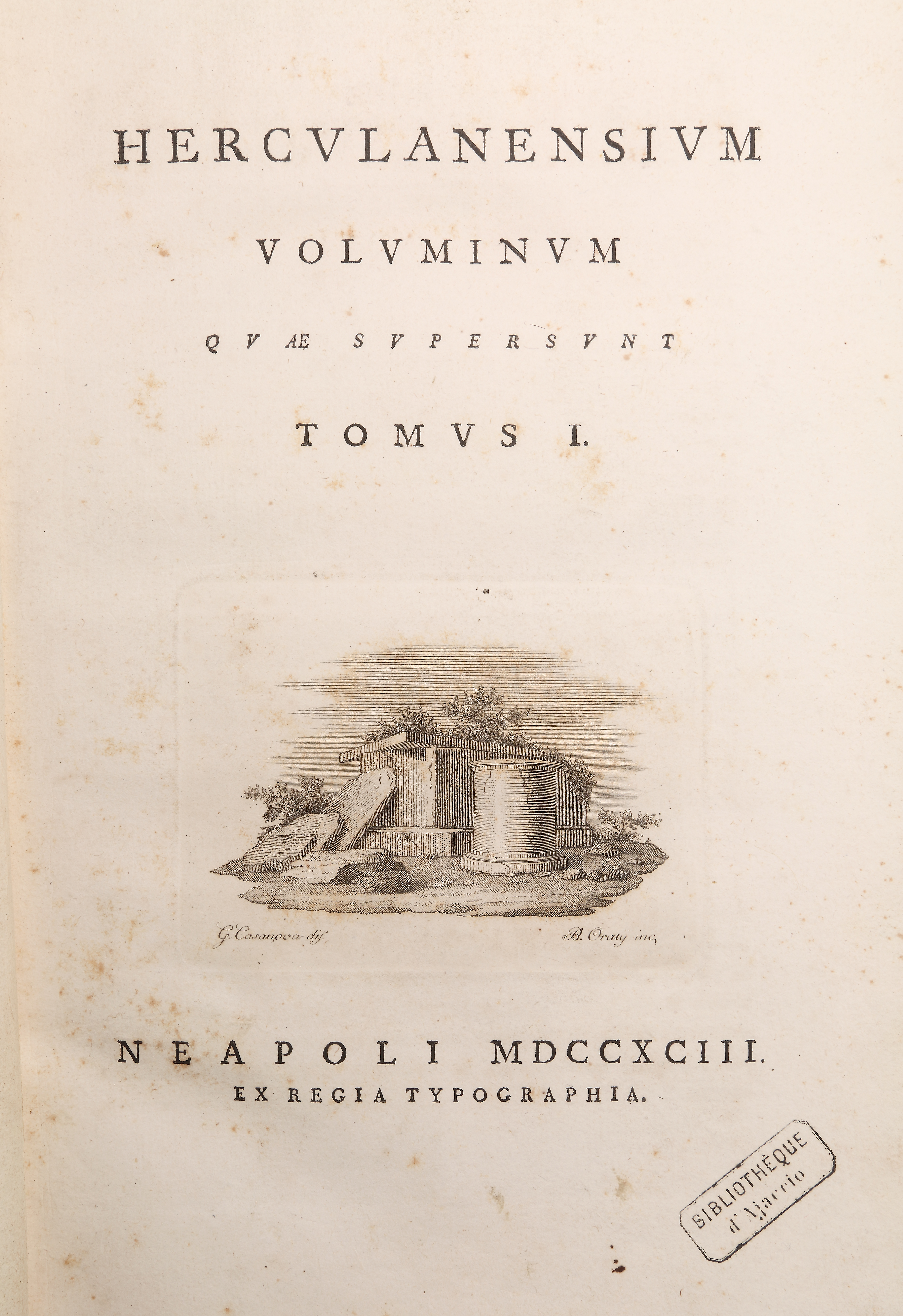
According to mythology, Herculaneum was founded by Heracles. Its Greek origins are proven thanks to the ramparts dating from this time as well as by its urban layout. In 63 AD, during the earthquake that shook Campania, the city was heavily hit. Then, on August 24, 79, Herculaneum was submerged by a huge river of burning mud on the sea side, as well as by the fiery cloud of Vesuvius, which covered the entire city and its inhabitants. The population tried to flee, but was trapped by the events. The excavations of the city uncovered urban architecture, murals, mosaics and incredibly preserved objects. The solidified mud that covered the city had protected from time all the elements that decompose naturally with time. The first excavation began in 1709, by a prince of the house of Lorraine, named Elboeuf. In 1738, the excavations of the city of Herculaneum were systematically resumed under the control of the Royal Court of Naples. Ten years later, Pompeii began to be explored. In 1750, Charles de Bourbon, then king of Naples and Sicily, decided to build a series of rooms in his palace of Portici in order to receive the finds. At his request, Ottavio Antonio Bayardi, an antique dealer, wrote Ercolan's Prodromo delle antichita, a catalog of objects found in Herculaneum during the first excavations. Then, the Royal Academy of Herculaneum, founded by the Marquis Tanucci, supervised the production between 1757 and 1796 of the 9-volume book Antichità di Ercolano.

